
Antarah ibn Shaddad
Pre-Islamic Arab poet and knight of the Banu Abs.

Abodi009 · CC BY-SA 3.0
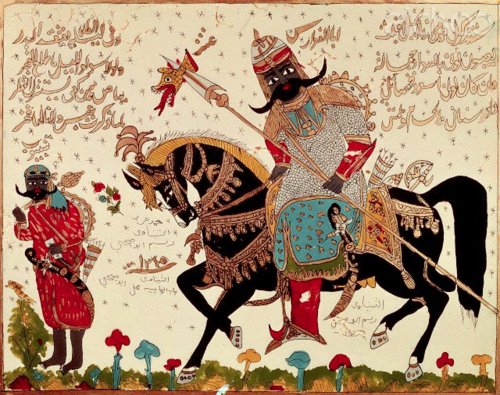
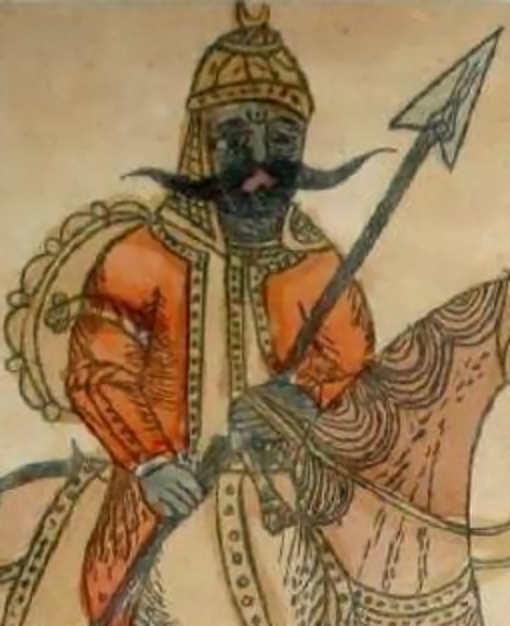
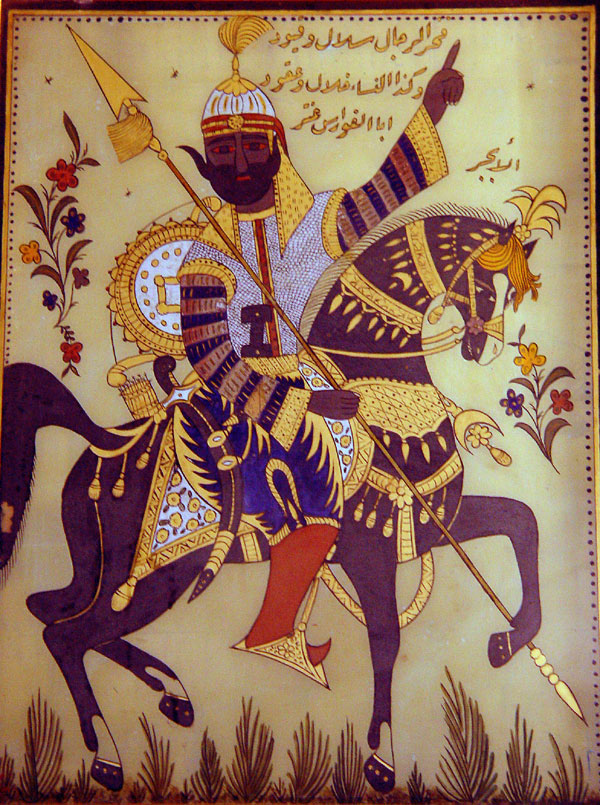
He is famous for both his poetry and his adventurous life, with his chief poem forming part of the Mu'allaqat, the collection of seven 'hanging odes' legendarily said to have been suspended in the Kaaba at Mecca. His life story is the basis of a long and extravagant romance.
- born
- 525 AD, Najd, Arabian Peninsula
- field
- Poetry, knighthood
- nationality
- Pre-Islamic Arab (Banu Abs tribe)
- known_for
- His poetry in the Mu'allaqat; his love for Abla; his adventurous life and romance
Lore & Background
Antarah was born in Najd to Shaddad al-Absi, a respected warrior of the Banu Abs, and an Ethiopian woman named Zabibah. Described as one of three 'Arab crows'—famous Arabs with a dark complexion—he grew up a slave. He fell in love with his cousin Abla but could not hope to marry her due to his position, and he gained the enmity of his father's wife Sumayya. He earned respect through his personal qualities, courage in battle, and skill as a poet and warrior. He earned his freedom after the Tayy tribe invaded the lands of the Banu Abs at the start of the Dahis and al-Ghabra war. When his father said, 'Antarah, fight with the warriors,' he replied that a slave only knows how to milk goats and serve masters. His father answered, 'Defend your tribe, O Antar, and you are free.' He fought and helped defeat the attackers. Afterward, to secure permission to marry Abla, he had to face challenges including obtaining a special kind of camel from the Lakhmid Kingdom under al-Nu'man III ibn al-Mundhir. Antarah's poetry, well-preserved, often speaks of chivalrous values, courage, heroism in battle, and his love for Abla. It was immortalized when one of his poems was included in the Mu'allaqat. The time and manner of his death are disputed: Ibn Duraid has him slain by Wasr ibn Jabir or in battle against the Tayy, while Abu Obeida says he died naturally of old age.
Reader's Guide
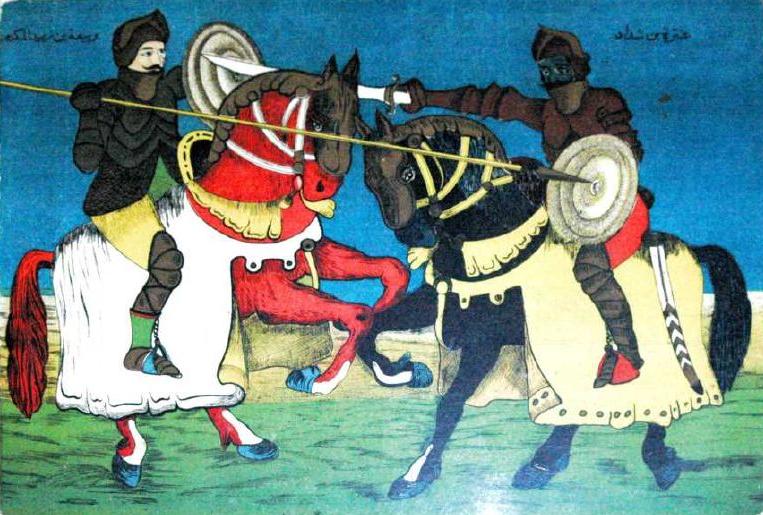
Antarah ibn Shaddad's significance lies in his dual legacy as a pre-Islamic poet and a folk hero. His poetry, preserved in the Mu'allaqat, offers detailed descriptions of battles, armor, weapons, horses, and desert life, providing a window into the values and material culture of his era. The Romance of Antar (Sirat Antar ibn Shaddad), a sprawling epic long transmitted orally and later published in multiple volumes, has been compared to English Arthurian romances. The story of Antar and Abla, embroidered into a poetic saga traditionally credited to al-Asma'i, is still recited by storytellers in Arab coffee houses. His legacy extends into modern culture: one of the seven clans of Bethlehem is called the Anatreh, named after him; the Russian composer Nikolai Rimsky-Korsakov wrote his Symphony No. 2 based on the legend; the French painter Étienne Dinet published a translation of a 13th-century epic Arab poem Antar; and the British Thornycroft company named its large oilfield tractor the 'Mighty Antar' after him. The epic also anachronistically features Antar battling Crusaders, reflecting its formation during the Crusades era.
Did You Know?
- Antarah was described as one of three 'Arab crows'—famous Arabs with a dark complexion.
- His chief poem is part of the Mu'allaqat, the collection of seven 'hanging odes' legendarily said to have been suspended in the Kaaba.
- One of the seven clans of Bethlehem, the Anatreh, is named after Antarah and formerly acted as guardians of the Church of the Nativity.
Origins and the Weight of Inheritance
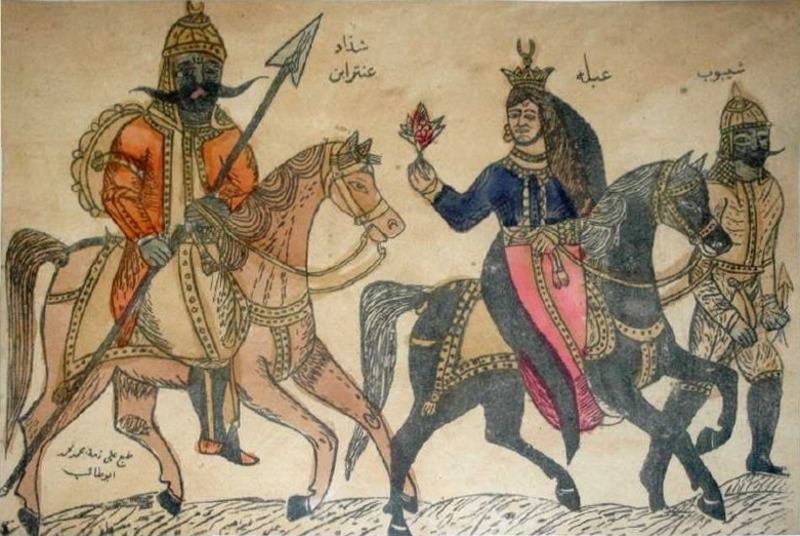
Antarah ibn Shaddad al-Absi came into the world in 525 AD in Najd, a region of the Arabian Peninsula, into a family of considerable standing within the Banu Abs tribe. His father, Shaddad al-Absi, was a respected warrior serving under the tribal chief Zuhayr. Yet Antarah's mother, Zabibah, was an Ethiopian woman, a fact that cast a long shadow over his identity and social standing. He was one of three figures known as the "Arab crows" (Aghribah al-'Arab'), a designation for prominent Arabs of dark complexion. Despite his father's prestige, Antarah grew up in the condition of a slave. This duality—born to a warrior lineage yet bound by servitude—defined his early years. He fell in love with his cousin Abla, a union that seemed impossible given his social position. Compounding his difficulties, his father's wife Sumayya became a persistent source of hostility. Nevertheless, Antarah began to carve out a reputation through sheer personal force: his courage in battle and his skill as a poet gradually earned him the respect that his birth circumstances had denied him.
The Battle That Broke His Chains
The turning point in Antarah's life arrived with the invasion of Banu Abs territory by the Tayy tribe, an event that marked the opening of the war between Dahis and al-Ghabra. When his father summoned him to join the warriors, Antarah delivered a bitter retort: a slave, he said, knew nothing of invading or defending, only milking goats and serving masters. His father's response was both a challenge and a promise—defend the tribe, and he would be free. Antarah took up arms and fought alongside his people, and together they repelled the Tayy attackers. This victory was not merely military; it was the key that unlocked his personal liberation. Yet freedom was only the first step. To marry Abla, the cousin to whom he had devoted countless love poems, Antarah faced a series of daunting conditions, including the acquisition of a special kind of camel from the Northern Arab Lakhmid Kingdom, then ruled by al-Nu'man III ibn al-Mundhir. The path from slave to husband was paved with extraordinary trials.
Verses Hung in the Sacred House
Antarah's poetic output is among the most carefully preserved bodies of pre-Islamic Arabic verse. His poems center on chivalrous ideals, battlefield courage, and the deep, aching love he felt for Abla. Their historical value extends well beyond the lyrical: they offer vivid, detailed portrayals of combat, armor, weaponry, horses, and the desert landscape of his era, making them invaluable windows into seventh-century Arabian life. The pinnacle of his literary recognition came when one of his poems was selected for inclusion in the Mu'allaqat, the celebrated collection of seven "hanging odes" traditionally said to have been displayed in the Kaaba at Mecca. His complete verse was published in Wilhelm Ahlwardt's 1870 collection of six ancient Arabic poets in London, and separately in Beirut in 1888. The broader narrative of his life, the Sirat Antar ibn Shaddad, was transmitted orally for generations before being printed in 32 volumes in Cairo in 1889 and in 10 volumes in Beirut in 1871.
A Legend That Outlived the Ages
The story of Antarah and Abla grew far beyond its pre-Islamic roots into a vast poetic saga, traditionally attributed to al-Asma'i, a poet in the court of Harun al-Rashid. The tale continues to be recited by traditional storytellers in Arab coffee houses, and its cultural weight has been likened to the Arthurian romances of English literature. In the folk epic Sīrat ʿAntar, the hero battles Crusaders and even assists the Byzantine Emperor—a deliberate anachronism reflecting the epic's crystallization during the Crusades, when people in the Levant and Egypt longed for a champion to drive out the Franks. One of the seven clans of Bethlehem bears the name Anatreh, derived from Antarah, and historically served as guardians of the Church of the Nativity. His influence reached the concert hall when Nikolai Rimsky-Korsakov composed his Symphony No. 2 on the Antar legend, and the stage when Mustapha al-Kurd wrote the first Palestinian opera, titled Antar, in 1988. The Thornycroft Mighty Antar, a massive oilfield pipeline tractor designed in the late 1940s, carried his name as a nod to the warrior's legendary strength.
Gallery
Frequently Asked Questions
Who is Antarah ibn Shaddad?
He was a pre-Islamic Arab poet and warrior from the Banu Abs tribe, born around 525 AD in Najd on the Arabian Peninsula. He is celebrated for pairing literary brilliance with a life of bold adventure and knighthood.
What is the Mu'allaqat and how does Antarah fit into it?
The Mu'allaqat is a legendary set of seven 'hanging odes' traditionally said to have been displayed on the Kaaba in Mecca. Antarah's chief poem holds one of those seven slots, marking him as one of the most honored voices in pre-Islamic Arabic verse.
Who is Abla and what is her connection to Antarah?
Abla was the woman Antarah loved deeply, and their bond forms the emotional heart of his famous extended romance. Their story of courtship and devotion became one of the most celebrated love narratives in Arabic literary tradition.
Why is Antarah ibn Shaddad important in the history of Arabic poetry?
His place in the Mu'allaqat cements his status among the most revered pre-Islamic poets. Beyond his verse, his dual identity as a skilled knight and a gifted poet made him a lasting cultural icon of the Banu Abs tribe.
More in Poets Of The Ancient World 1-17
Spotted an error? Know more?
This is a living reference — every entry is fact-audited, and reader corrections feed straight into our audit queue. Suggest an edit · See this site's audit record